Overview
ACR system for standardized breast imaging reporting (mammography, ultrasound, MRI).
Current edition: 5th edition (2013).
Indications
- Screening mammography (annual from age 40-50 per guidelines)
- Diagnostic mammography/US for palpable mass, nipple discharge, asymmetry
- Breast MRI: high-risk screening (BRCA), staging, response assessment
Diagnostic criteria
BI-RADS Assessment Categories
| Category | Assessment | Malignancy Risk | Action |
|---|---|---|---|
| 0 | Incomplete | N/A | Additional imaging needed |
| 1 | Negative | Essentially 0% | Routine screening |
| 2 | Benign | 0% | Routine screening |
| 3 | Probably benign | <2% | Short-interval follow-up (6 months) |
| 4A | Low suspicion | >2% – ≤10% | Tissue diagnosis |
| 4B | Moderate suspicion | >10% – ≤50% | Tissue diagnosis |
| 4C | High suspicion | >50% – <95% | Tissue diagnosis |
| 5 | Highly suggestive of malignancy | ≥95% | Tissue diagnosis |
| 6 | Known biopsy-proven malignancy | N/A | Surgical excision |
Key Descriptors (Mammography)
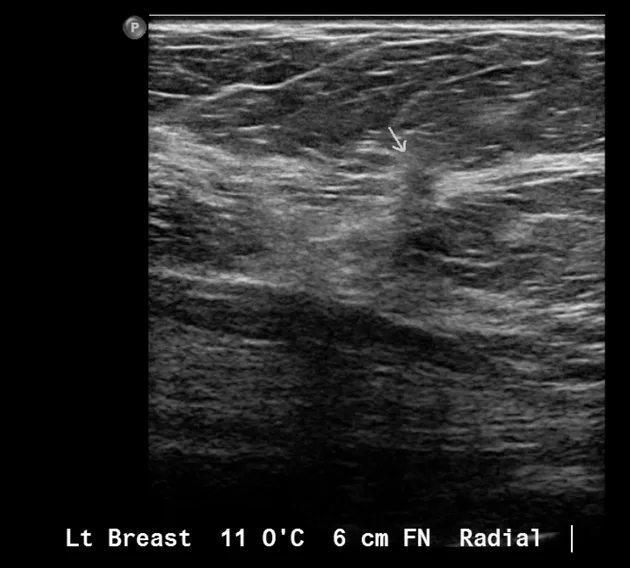
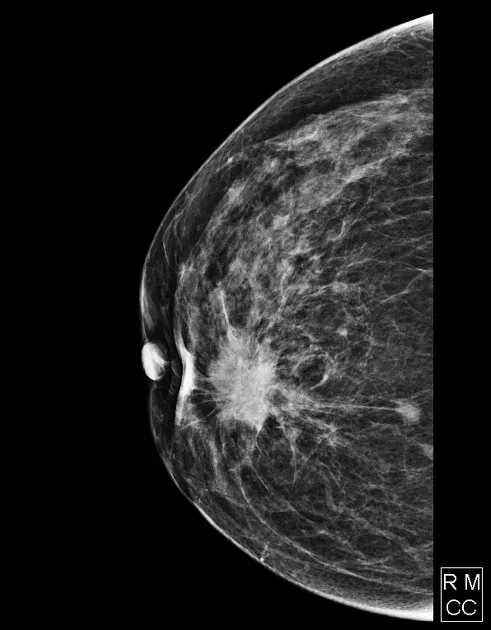
- Mass: Shape (oval/round/irregular), margin (circumscribed/microlobulated/obscured/indistinct/spiculated), density
- Calcification: Typically benign (diffuse, skin, vascular) vs suspicious (amorphous, coarse heterogeneous, fine pleomorphic, fine linear/branching)
- Architectural distortion: Distortion without definite mass
- Asymmetry: Focal asymmetry, developing asymmetry
Malignant Features
- Spiculated mass
- Fine linear branching calcifications
- Developing asymmetry
- New architectural distortion
Management
- Category 3: 6-month follow-up → if stable → 12 months → if stable → return to annual
- Category 4-5: Core needle biopsy (CNB) or vacuum-assisted biopsy (VAB)
Related diseases
- Breast Cancer
Example cases by category
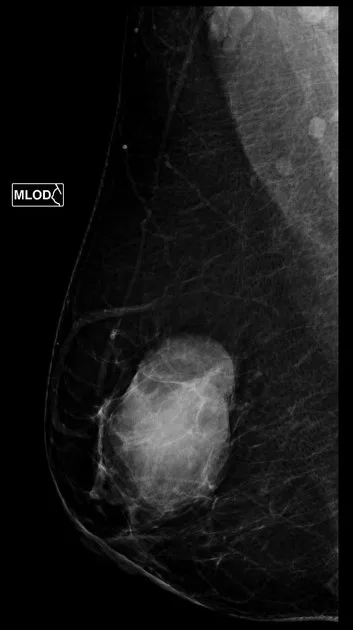
BI-RADS 2 (Benign)
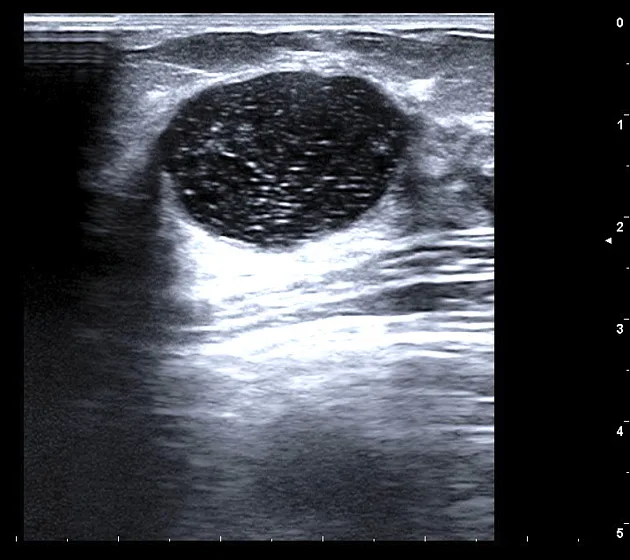
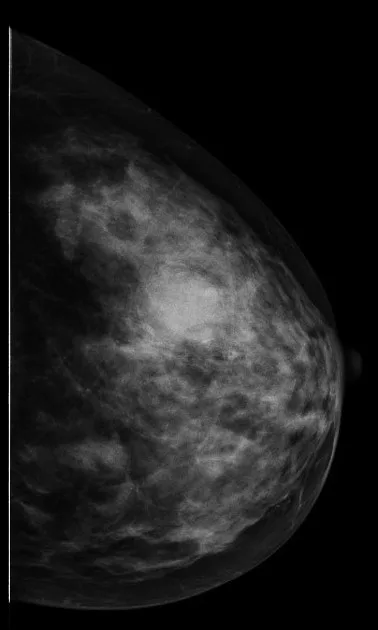
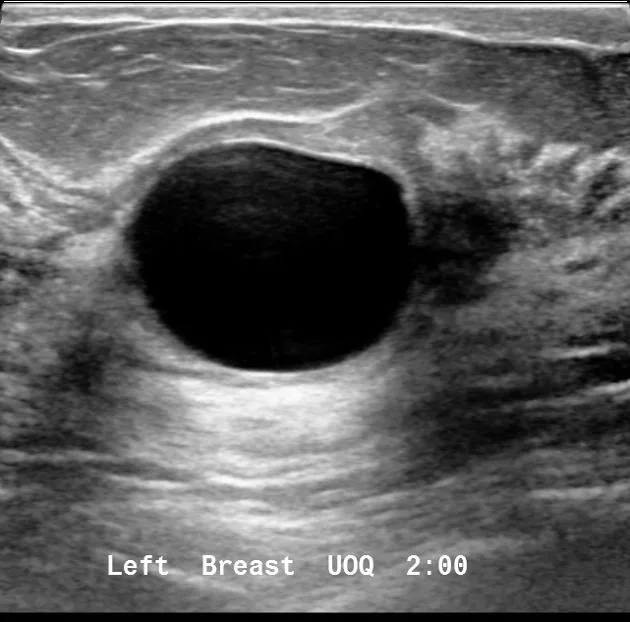
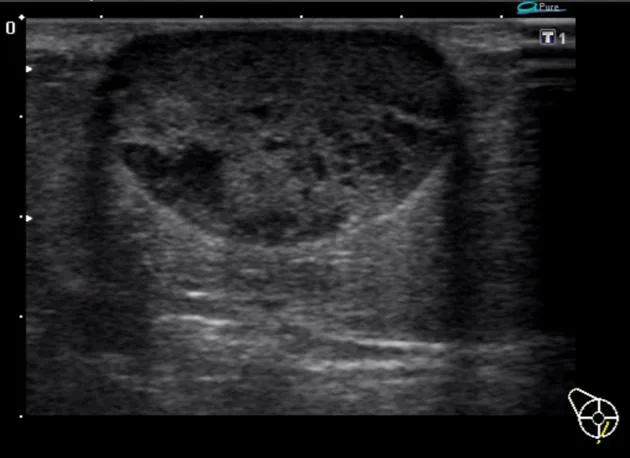
BI-RADS 3 (Probably benign)
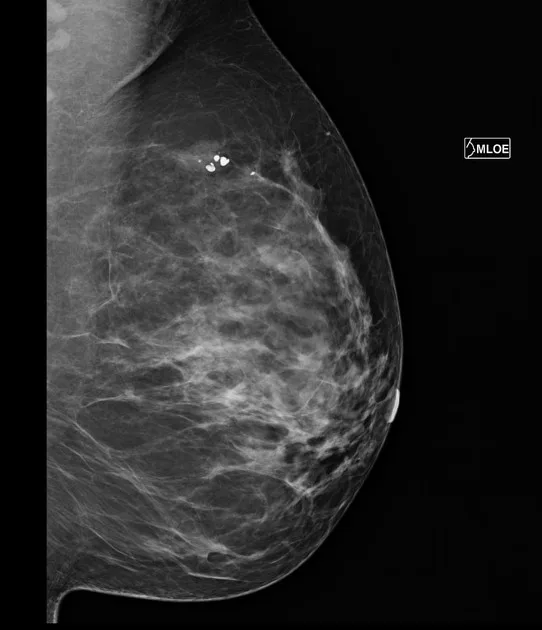
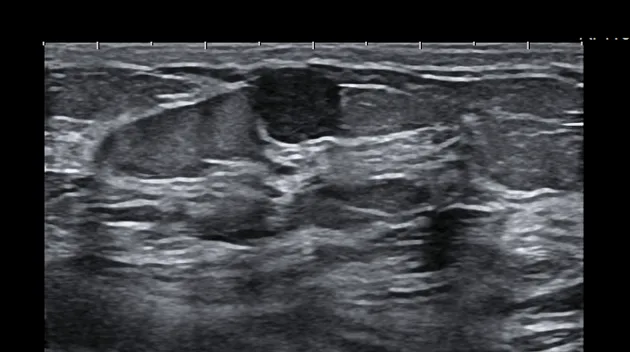
BI-RADS 4 (Suspicious)
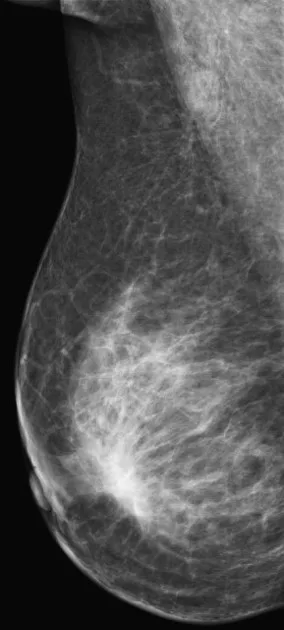
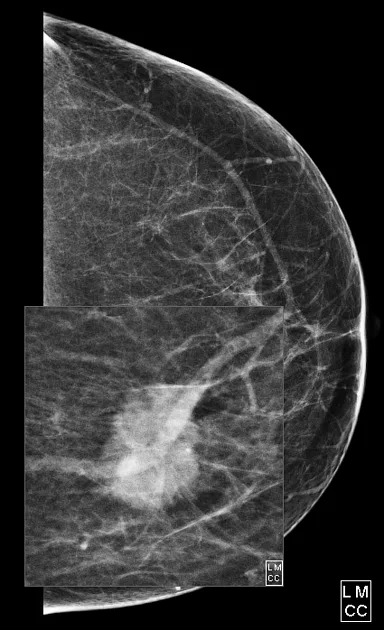
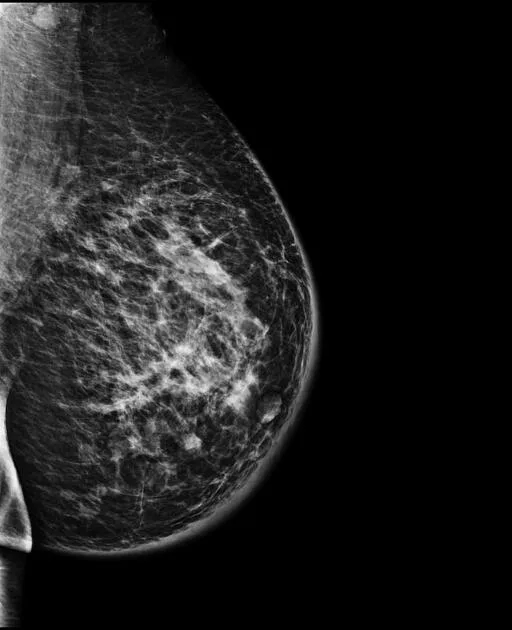
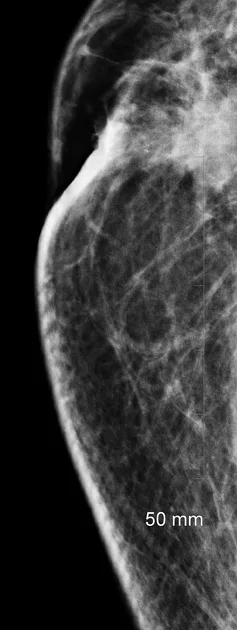
BI-RADS 5 (Highly suggestive)