
Overview
Standardized criteria for measuring tumor response to treatment in solid tumor clinical trials.
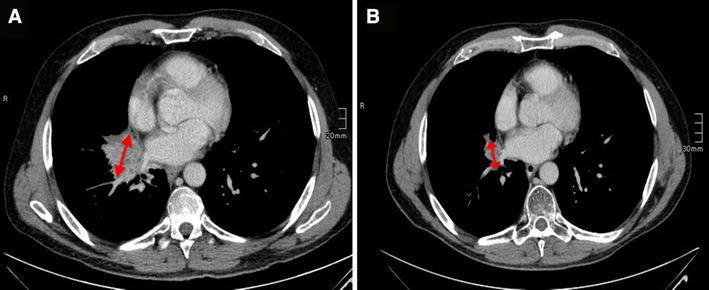
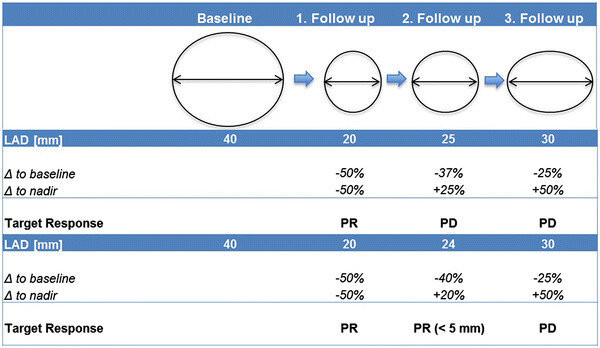
Indications
- Oncology clinical trials
- Treatment response monitoring in solid tumors
- Not applicable to: lymphoma (use Lugano), brain tumors (use RANO), hepatocellular carcinoma (use mRECIST)
Diagnostic criteria
Measurable vs Non-measurable Lesions
- Measurable: CT ≥10 mm long axis; lymph node ≥15 mm short axis
- Non-measurable: <10 mm; pleural effusion; ascites; leptomeningeal disease; cystic lesions (unless targeted)
Target vs Non-target Lesions
- Target lesions: Up to 5 total (max 2 per organ); longest diameter sum (LD sum)
- Non-target: All other lesions; presence/absence tracked only
Response Categories
| Response | Criteria |
|---|---|
| CR (Complete Response) | All target lesions disappeared; LN <10 mm short axis |
| PR (Partial Response) | ≥30% decrease in LD sum vs baseline |
| PD (Progressive Disease) | ≥20% increase in LD sum vs nadir + ≥5 mm absolute increase; or new lesion |
| SD (Stable Disease) | Neither PR nor PD |
Key Measurement Rules
- Measure longest diameter (LD) of target lesions
- Lymph nodes: measure short axis
- Non-target lesions: unequivocal progression = PD even with PR/SD in targets
Special Considerations
- mRECIST (HCC): Only viable (arterially enhancing) tumor portion measured
- iRECIST: For immunotherapy (slower response kinetics; allows unconfirmed PD)
- New lesion = immediate PD in RECIST 1.1