Overview
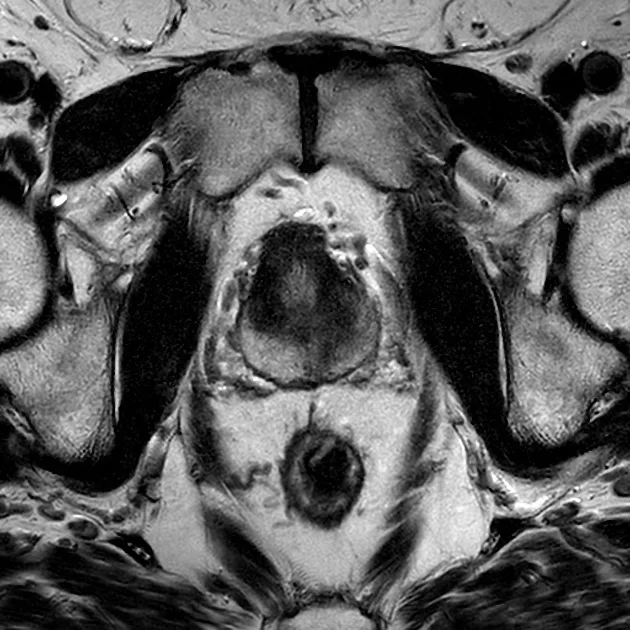
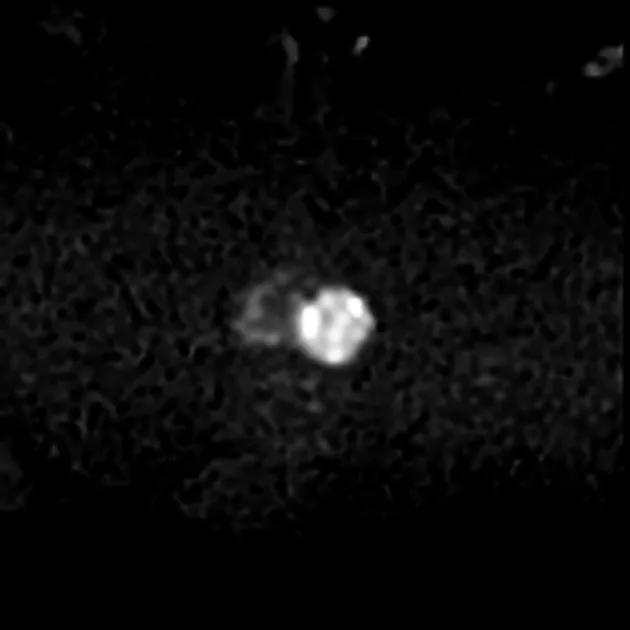
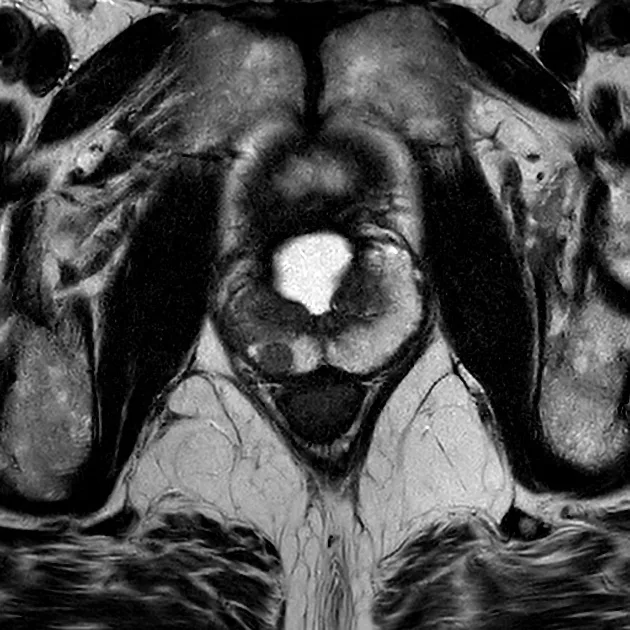
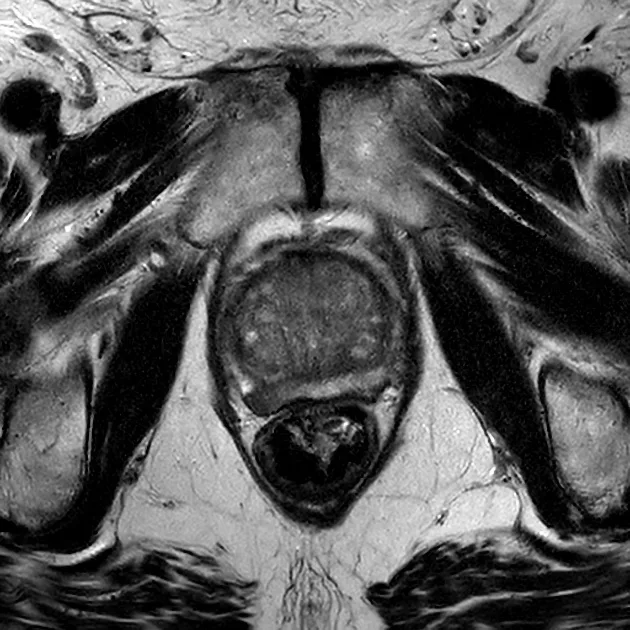
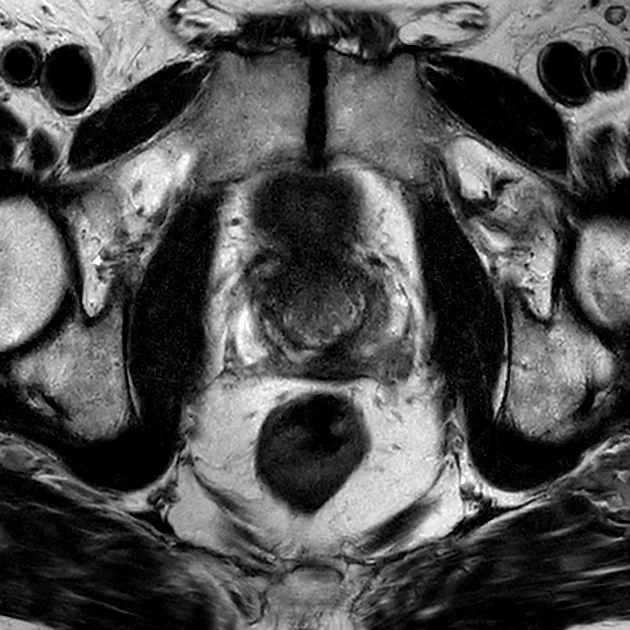
ACR/ESUR/AdMeTech system for standardizing mpMRI interpretation and reporting for prostate cancer.
Current version: PI-RADS v2.1 (2019).
Indications
- Elevated PSA or PSA velocity
- Positive DRE
- Prior negative biopsy but elevated PSA
- Active surveillance monitoring
Diagnostic criteria
PI-RADS Score
| Score | Clinically Significant Cancer (CSC) likelihood |
|---|---|
| 1 | Very low (CSC highly unlikely) |
| 2 | Low (CSC unlikely) |
| 3 | Equivocal (CSC uncertain) |
| 4 | High (CSC likely) |
| 5 | Very high (CSC highly likely) |
Dominant Sequence by Zone
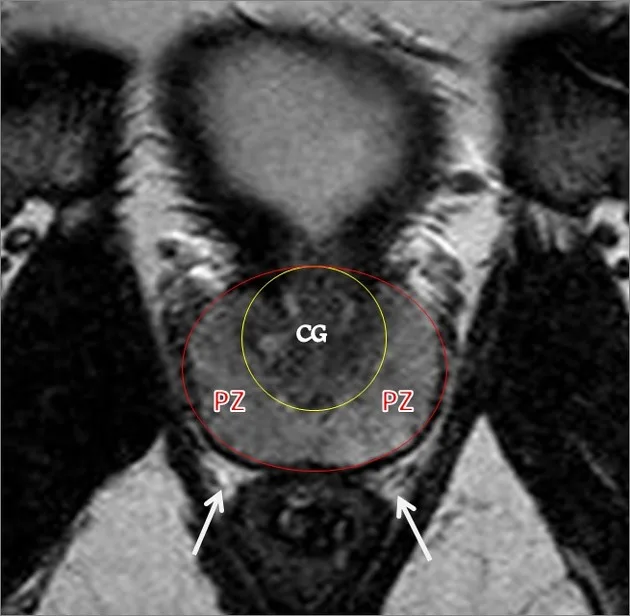
- Peripheral zone (PZ): DWI dominant
- Transition zone (TZ): T2WI dominant
- DCE: Adjunct — upgrades PI-RADS 3 PZ by 1 if positive
Assessment Per Sequence
T2WI (TZ dominant)
- 1-2: BPH-like nodules
- 3: Heterogeneous signal with obscured margins
- 4: Lenticular or non-circumscribed homogeneous hypointense; <15 mm
- 5: Same as 4 but ≥15 mm OR extraprostatic extension
DWI/ADC (PZ dominant)
- 1-2: No restriction or linear/wedge
- 3: Focal mild-moderate restriction; <15 mm
- 4: Marked restriction; <15 mm
- 5: Same as 4 but ≥15 mm
Management
- PI-RADS 1-2: No biopsy; PSA follow-up
- PI-RADS 3: Clinical decision (MRI-targeted + systematic biopsy in most)
- PI-RADS 4-5: MRI-targeted biopsy + systematic biopsy recommended
Follow-up
- Active surveillance: repeat mpMRI every 1-3 years
Related diseases
- Prostate Cancer
- MRI Prostate PI-RADS
Example cases by category
PI-RADS 2 (Low)
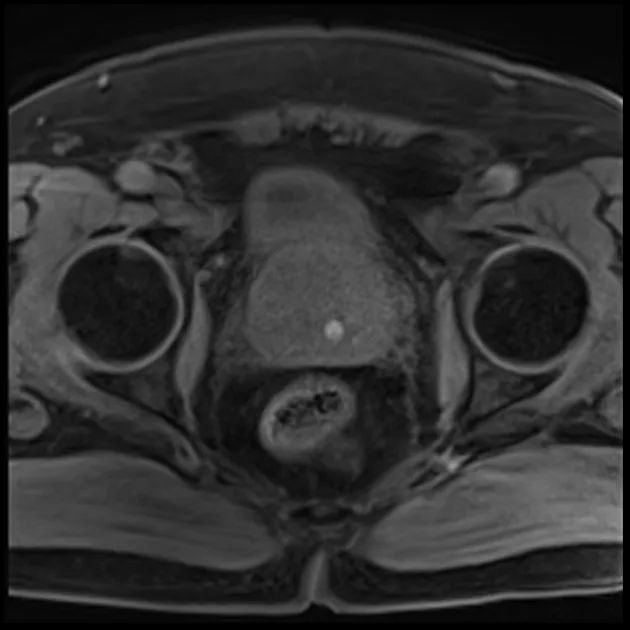
PI-RADS 3 (Equivocal)
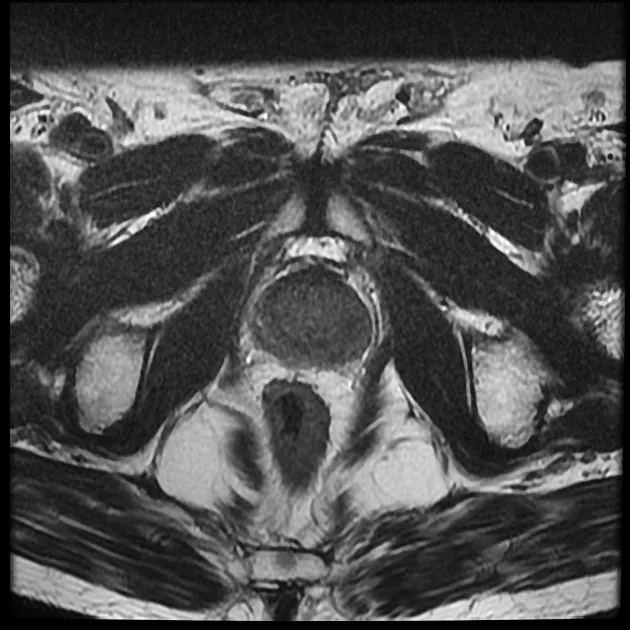
PI-RADS 4 (High)
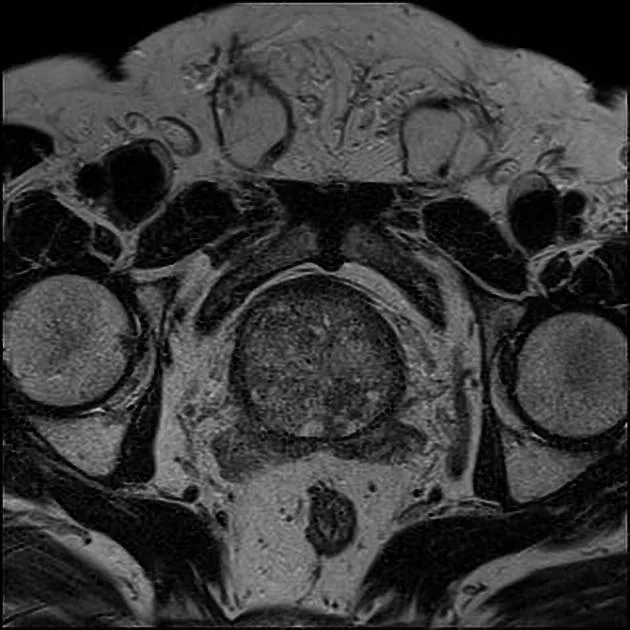
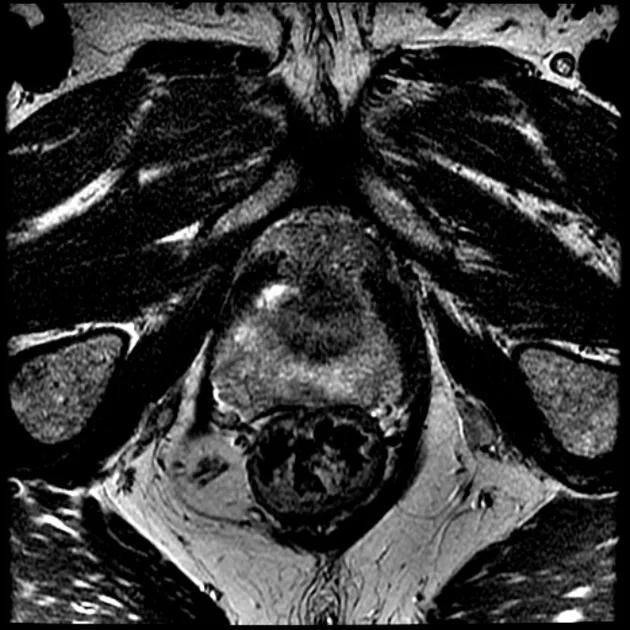
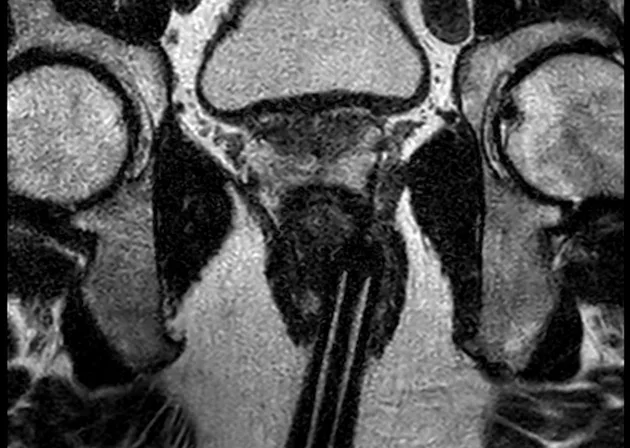
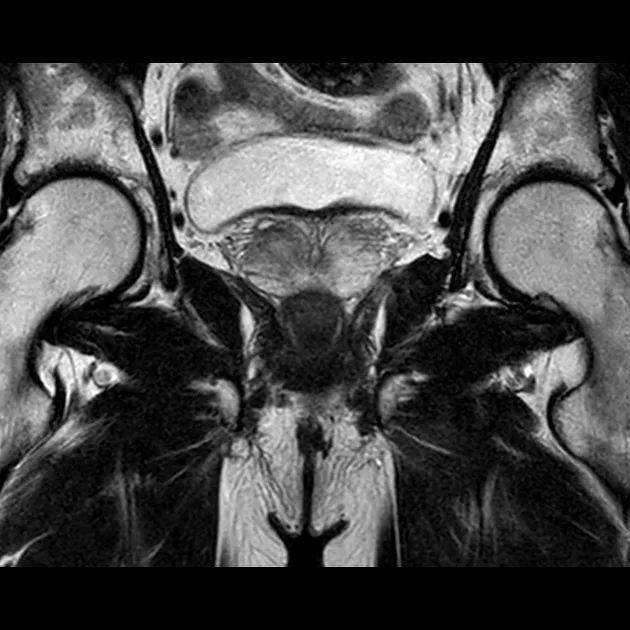
PI-RADS 5 (Very high)